
Kolkata is more than one bridal tradition.
Most bridal makeup marketing in Kolkata defaults to a Bengali Hindu look — chandan, aalta, a particular sindoor placement. That's the wrong default for a Muslim bride, or a Punjabi, Marwari or South Indian bride, whose actual conventions are different and deserve to be planned for specifically, not adapted from someone else's template.
Muslim and non-Bengali bridal looks are planned around each community's actual conventions — different from the Bengali Hindu default of chandan facial art and a specific sindoor placement. Kolkata has significant Punjabi, Marwari, Gujarati and South Indian communities alongside its Muslim population, each with its own draping, jewellery and colour traditions. It's the same bridal rate as any other look, from ₹8,000 — a style choice, not a different price tier.
A lot of bridal makeup marketing in any Bengali-majority city defaults to Bengali conventions without asking. That default is simply wrong for a meaningful share of Kolkata's brides — and getting it right means asking about your actual functions and traditions before the trial, not assuming.
This isn't treated as a niche request handled as an afterthought — it's planned with the same care as any other bridal booking, just against a different set of conventions.
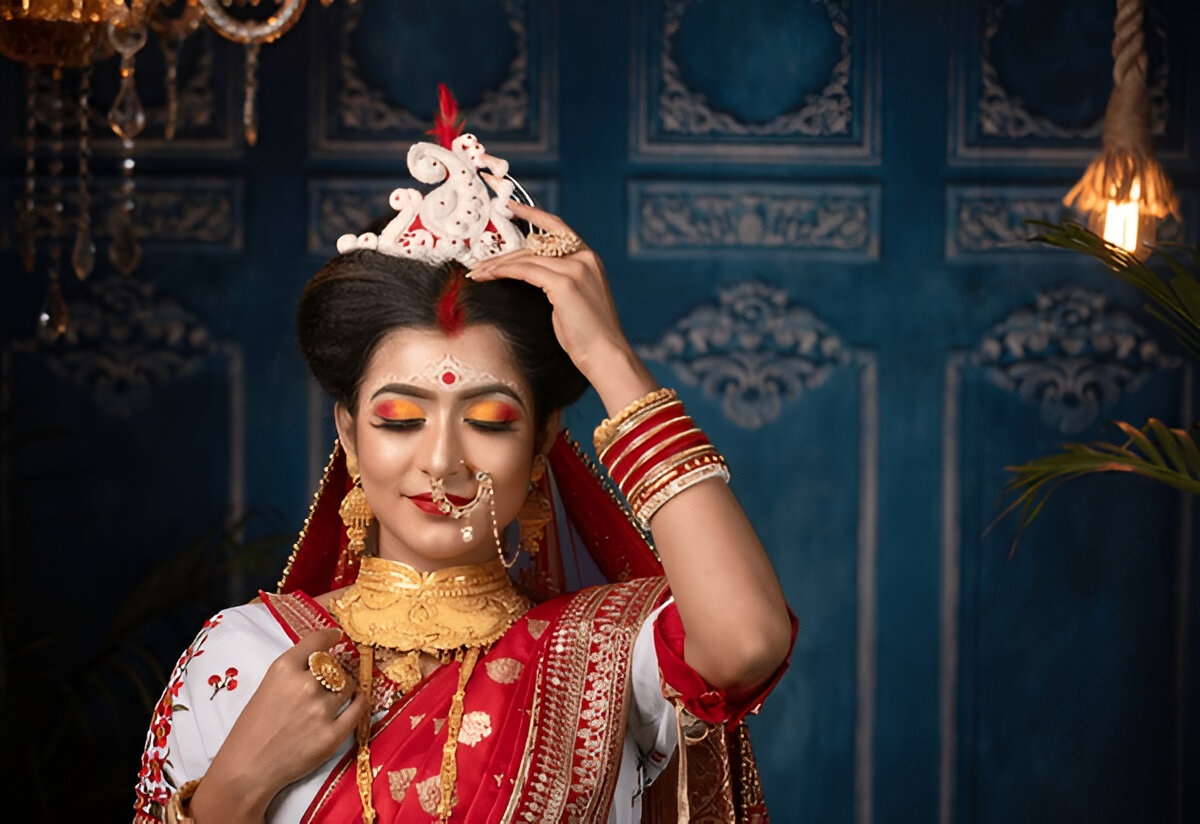
Three things planned differently
Muslim bridal — planned around Nikah and Walima
A Muslim bridal look generally skips chandan facial art and sindoor-adjacent elements, and is planned around the Nikah and Walima functions rather than Gaye Holud or Ashirbad. Veil or dupatta styling and jewellery placement are discussed against the bride's specific family traditions.
Punjabi, Marwari & Gujarati bridal — different draping, different colour traditions
These communities have their own draping conventions (often lehenga rather than saree), jewellery placement (like a maang tikka or nath positioned differently than Bengali bridal jewellery), and colour palettes that differ from the deep red typically associated with Bengali bridal looks.
South Indian bridal — distinct draping and gold-forward styling
South Indian bridal looks typically favour a different saree draping style, gold-forward jewellery placement, and specific hair styling with jasmine or fresh flowers — planned as its own convention, not adapted from a North Indian or Bengali template.
Tell me your community and functions upfront: whether it's Nikah and Walima, Sangeet and a Punjabi wedding day, or a South Indian ceremony, sharing this before the trial means the right references, products and jewellery-placement plan are ready from the start.
Frequently asked
How does a Muslim bridal look differ from a Bengali Hindu bridal look?
A Muslim bridal look generally skips chandan facial art and sindoor-adjacent elements used in Bengali Hindu bridal makeup, and is planned around the Nikah and Walima functions rather than Gaye Holud or Ashirbad. Jewellery placement, veil or dupatta styling, and colour choices are discussed based on the bride's specific family traditions rather than assumed from a single template.
Do you do bridal makeup for Punjabi, Marwari or South Indian weddings in Kolkata?
Yes. Kolkata has significant Punjabi, Marwari, Gujarati and South Indian communities, each with their own bridal conventions — different draping styles, jewellery placement, and colour traditions from Bengali bridal looks. These are planned around the specific community's actual customs, discussed at booking rather than defaulted to a generic "North Indian bridal" style.
Is non-Bengali bridal makeup priced differently from Bengali bridal makeup?
No — it's the same bridal rate, currently from ₹8,000. This is a style and convention choice, not a different service tier or a premium add-on.
What should I tell the artist in advance if my bridal look isn't the default Bengali style?
Your community and specific family traditions, the functions being covered (Nikah and Walima, or Sangeet and the wedding day, for example), and any specific elements that must be included or avoided. This is best discussed before the trial so the right products and references are brought, rather than adjusted on the day.
Can the trial be used to confirm community-specific details like draping or jewellery placement?
Yes — bring the actual outfit, dupatta or veil, and jewellery to the trial so draping style and placement can be confirmed against the real pieces, the same way colour-matching works for any bridal trial.
Tell me your traditions.
I'll plan around them.
Community, functions, and anything specific that must be included or avoided — send it over WhatsApp and we'll plan the look properly from the start.
Related: Bridal makeup trial · Saree & lehenga draping · Destination wedding makeup