
One session, no surprises on the day.
A lot of trials fail quietly — not because the artist is wrong, but because the bride shows up without the outfit, the jewellery, or a clear sense of what to actually judge. A trial is only as useful as what you bring to it.
A bridal makeup trial is a genuine colour-match and technique session, not a token formality before the "real" consultation. Beautiliate charges ₹2,000, fully adjusted against your final booking once confirmed — so it costs nothing extra if you go ahead. The most common reason trials fail to predict the wedding day accurately is arriving without the actual outfit or a clear photo of it.
A trial exists to answer one question honestly: will this specific base, these specific shades, and this specific technique hold up and look right on your actual wedding day, in your actual outfit, under your actual venue's lighting?
It can only answer that question if the conditions at the trial resemble the conditions on the day — which is a preparation problem far more often than a skill problem.
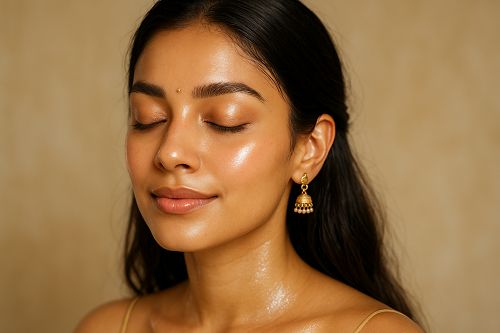
Five things that make a trial actually useful
-
Timing
Book it 4–8 weeks before the wedding
Early enough to still act on what you learn, but close enough that your skin condition at the trial matches your skin condition on the day.
-
Outfit
Bring your actual outfit, or a clear photo
Colour-matching cheek and lip tones against the real saree or outfit colour, not a guess, is the single biggest reason trials succeed or fail.
-
Jewellery & hair
Bring the jewellery and hairstyle reference
How makeup reads changes with jewellery placement near the face and how the hair is styled around it.
-
Lighting
Photograph it in lighting like your venue's
A look approved under one lighting type can read completely differently under another — daylight, tube light and banquet-hall lighting all behave differently.
-
Feedback
Say exactly what you'd change
"Slightly less contour" or "a warmer lip shade" is far more useful than "I'm not sure" — specific feedback is what makes the second attempt better.
Frequently asked
How much does a bridal makeup trial cost in Kolkata?
Beautiliate charges ₹2,000 for a bridal makeup trial, which is fully adjusted against the final booking amount once you confirm — so if you go on to book, the trial effectively costs nothing extra.
How long before the wedding should I book my trial?
Four to eight weeks before the wedding date is the usual window. Early enough that there's still time to act on what you learn — switching a shade, adjusting a style — but close enough that your skin's current condition is a reasonably accurate preview of your wedding-day skin.
What should I bring to a bridal makeup trial?
Your actual outfit if possible, or at minimum a clear, well-lit photo of it — colour-matching against the real saree or outfit is the single biggest factor in whether a trial actually predicts the wedding-day result.
Bringing the jewellery you plan to wear near the face, and a reference for your intended hairstyle, also makes the trial more accurate.
Is one trial enough, or should I book more than one?
One well-prepared trial is usually enough for most brides. A second trial is worth considering if the first one revealed a significant issue that needs a different approach entirely — for example, discovering a product reaction, or realising the planned technique doesn't suit the venue's actual lighting.
Does the trial include hair styling too?
The trial focuses primarily on the makeup and colour-matching. Hair styling can be included on request if it materially affects how the makeup reads — for example, if an updo will sit close to the face — otherwise it's usually kept for the wedding-day booking itself to keep the trial session efficient.
Send your date
and your outfit colour.
I'll suggest the right trial timing and tell you exactly what to bring so the session actually predicts your wedding day.
Related: HD & Ultra HD makeup · Natural bridal look · Bridal makeup in Kestopur