
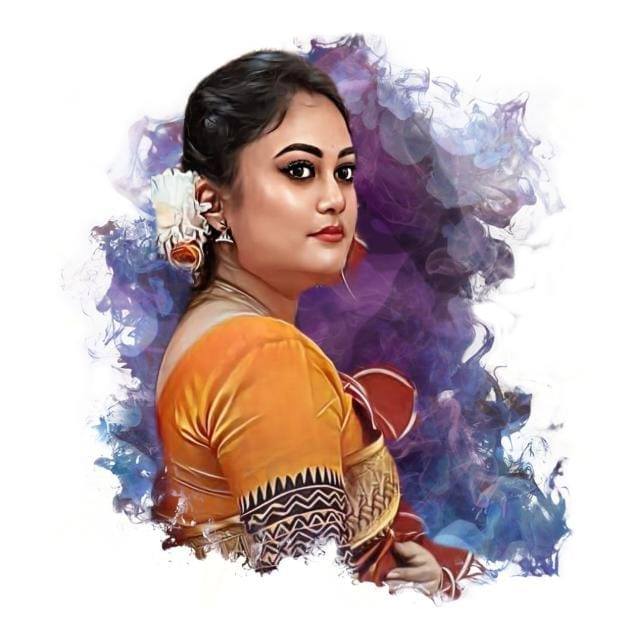
A Bengali wedding, function by function
The real order the functions usually run in, and the one-line makeup difference at each.
The order, and what each one needs
 BeautiliateRajasree Paul
Most wedding planning treats every pre-wedding function as a smaller version of the main event — same face, same energy, just "lighter" somehow. That's not how any of this actually works from behind the brush. Ashirbad, Gaye Holud, Sangeet, Mehendi, the wedding day and Bou Bhaat are five or six genuinely different technical jobs, each shaped by its own light, its own physical demands, and its own camera conditions. Planning them as one look is why so many function photographs come back looking slightly wrong — not bad, just mismatched to what the room or the weather actually needed.
1. Ashirbad — the blessing ceremony
Ashirbad is usually the first function, often weeks before the wedding itself, and it's entirely indoors in front of both families' elders. Ashirbad and engagement makeup is built for exactly that: a natural, polished base that reads well under a living room's warm tube lighting and phone-camera flash, without the heavier contouring or long-wear setting a wedding-day base needs. The goal is looking like an elevated version of yourself in front of grandparents — not a dramatically different face three weeks before anyone's actually ready to see the full bridal look.
2. Gaye Holud — the turmeric ceremony
One or two days before the wedding, Gaye Holud moves everything outdoors into direct daylight, and turmeric paste gets physically applied to your face by your own family. Gaye Holud makeup has to survive that: a lighter base set much harder than usual, color-matched in actual daylight rather than indoor tube light, built to let turmeric lift off cleanly instead of staining through. It's the function most likely to get skipped when booking a makeup artist — and the one where skipping it shows up worst in photographs.

Nobody plans Gaye Holud makeup. Everybody regrets not planning Gaye Holud makeup.
3. Sangeet & Mehendi — two different problems, same evening
Sangeet and Mehendi often land close together, sometimes the same evening, but they're opposite technical problems. Sangeet and Mehendi makeup are priced and planned separately because of it: Sangeet is a dance function, so the look has to survive movement and hours under event lighting without breaking down. Mehendi is a long, still, seated function, so the look stays lighter and has to resist smudging through hours of sitting rather than dancing.
4. The wedding day — the full traditional look
This is the one function every bride plans for properly, and for good reason — it's the look that has to anchor every other photograph from the event. Traditional bridal makeup is the complete package: full wedding-day base, chandan facial art, bridal hair styling, and coordination with the saree or lehenga draping, so the whole look comes together rather than being three separate decisions made by three different people on the morning of.
5. Bou Bhaat & reception — built for the stage, not the mirror
Bou Bhaat and the reception move the whole problem into a banquet hall: camera flash, mixed indoor lighting, and hours standing on a stage rather than daylight and a single ceremony. Bou Bhaat and reception makeup is set harder and a shade more defined than a daytime look specifically so it photographs correctly under flash instead of washing out under it.
Why booking one artist across functions actually matters here
It isn't just convenience. An artist who has already seen your skin behave under turmeric, through a night of dancing, and under daylight walks into the wedding day with real information instead of a guess. Multi-function bookings are also quoted as a bundle rather than priced separately, which is covered in full on the published price list — including why those prices are published at all rather than quoted privately per function.
What is the correct order of Bengali wedding functions?
Typically: Ashirbad (often weeks before), Gaye Holud (one to two days before), Sangeet and Mehendi (often clustered around the same window, sometimes the evening before), the wedding day itself, and Bou Bhaat or the reception (usually the next day or shortly after). Exact timing varies by family, but this is the typical sequence.
Do I need a different makeup look for every function?
Yes, meaningfully different, not just lighter or heavier versions of the same look. Each function has its own light, its own physical demands, and its own camera conditions — covered function by function above.
Can one artist do makeup for every function, or do I need different artists?
One artist can do every function, and it's usually the better choice — it's typically bundled at a lower combined rate, and an artist who has already seen your skin behave under turmeric, dancing and daylight can plan the wedding-day base far more accurately.
Tell me your dates.
I'll plan the sequence.
Send me which functions you're booking and when — I'll tell you exactly how the makeup for each one should be sequenced and planned.